Why Wooden Cold Pressed Oil is Different from Refined Oil: A Complete Comparison



When buying cooking oil, many consumers come across terms like "Wooden Cold Pressed Oil" and "Refined Oil." While both are commonly used in kitchens, they differ significantly in their manufacturing methods, processing techniques, and characteristics. Understanding these differences helps consumers make informed choices based on their cooking preferences and lifestyle. This article explains the complete comparison between wooden cold pressed oil and refined oil in a simple and unbiased manner.
Understanding Wooden Cold Pressed Oil
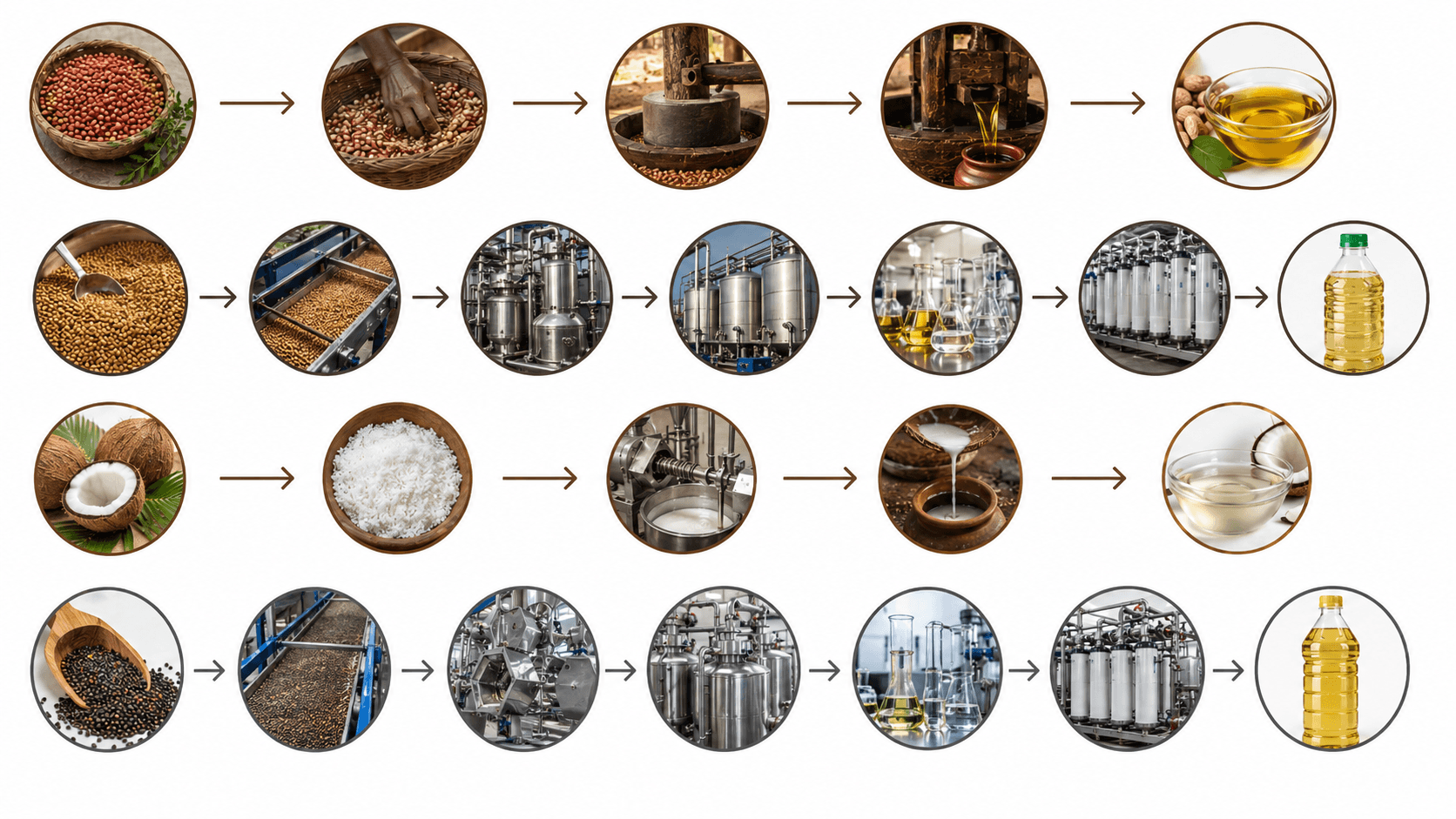
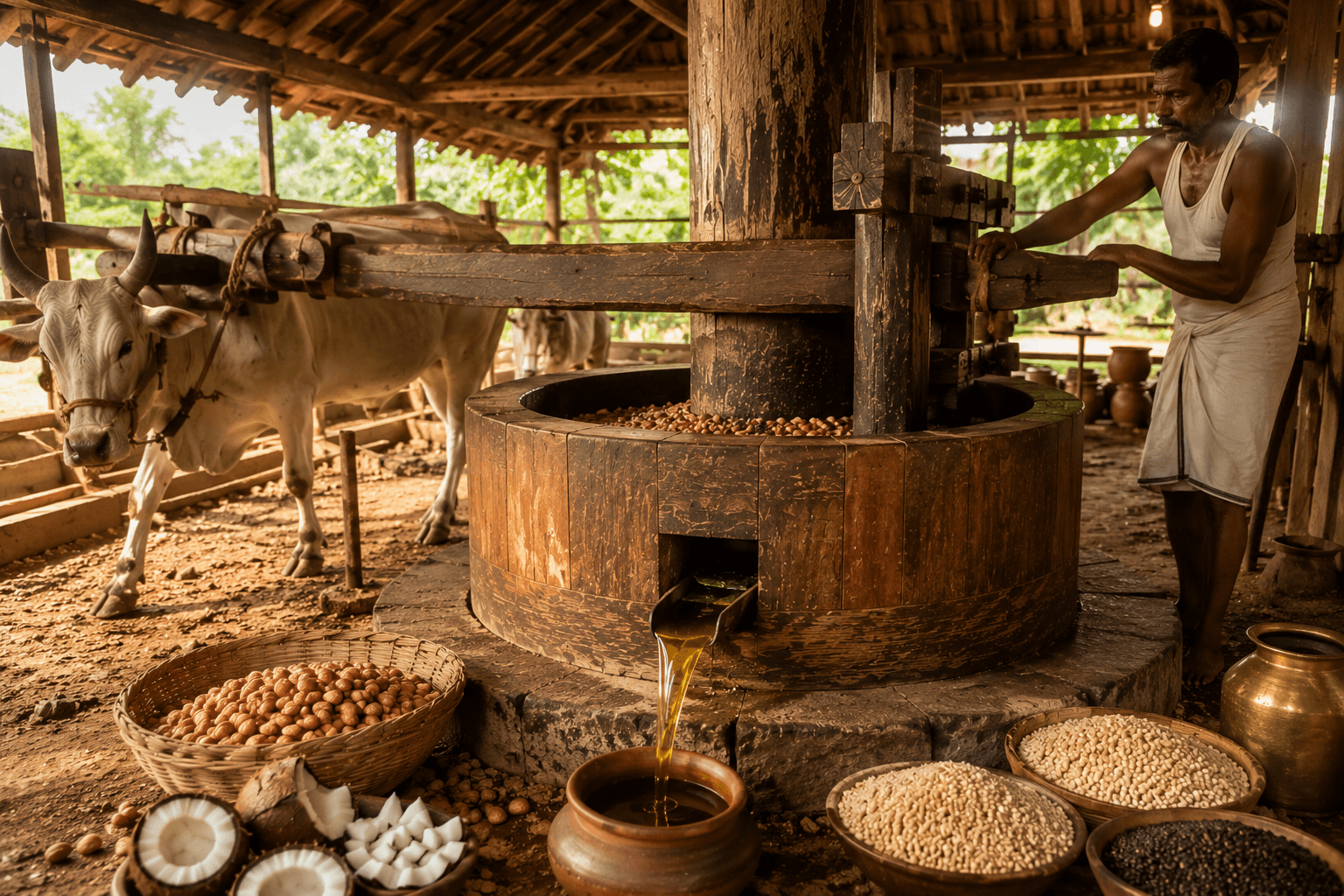
Wooden cold pressed oil is extracted using a traditional wooden press, commonly known as a Chekku or Ghani. The seeds are slowly crushed using mechanical pressure without intensive industrial refining. Because the extraction process is gentle, the oil retains its natural aroma, color, and characteristic flavor of the original seed.
What is Refined Oil?
Refined oil is produced through multiple industrial processing stages designed to increase shelf life, improve clarity, and create a neutral taste. Depending on the manufacturing process, refined oils may undergo degumming, neutralization, bleaching, deodorization, and filtration before reaching consumers.
Manufacturing Process Comparison
- Wooden Cold Pressed Oil
- Traditional wooden extraction
- Slow pressing
- Minimal processing
- Natural aroma
- Characteristic seed flavor
- Refined Oil
- Industrial extraction
- Multiple refining stages
- Uniform appearance
- Neutral smell
- Consistent color
Appearance
Wooden cold pressed oils often have a naturally rich color and may contain fine natural sediments depending on the filtration process. Refined oils are generally clearer because they undergo extensive purification.
Flavor and Aroma
One of the distinguishing features of wooden cold pressed oils is their authentic aroma and flavor, which reflect the original seed. Refined oils are processed to remove most natural odors and flavors, resulting in a more neutral cooking oil.
Common Uses
- Wooden Cold Pressed Oil
- Everyday cooking
- Traditional Indian recipes
- Pickles
- Chutneys
- Seasoning
- Refined Oil
- Deep frying
- Commercial food preparation
- Neutral-flavored dishes
- Bakery applications
Traditional methods preserve heritage while modern methods prioritize consistency.
Conclusion
Both wooden cold pressed oils and refined oils have their own applications depending on cooking style and personal preference. Understanding how each type is produced helps consumers choose the oil that best suits their needs.
To learn more about wooden cold pressed oils, traditional extraction methods, and different edible oils, explore the educational blog collection at www.minaliya.in.